My Role: Senior UI Designer, UX Designer
Visual design, Prototyping & User Testing, User Engagement and Adoption management
Project Date: 2015-2017
Overview
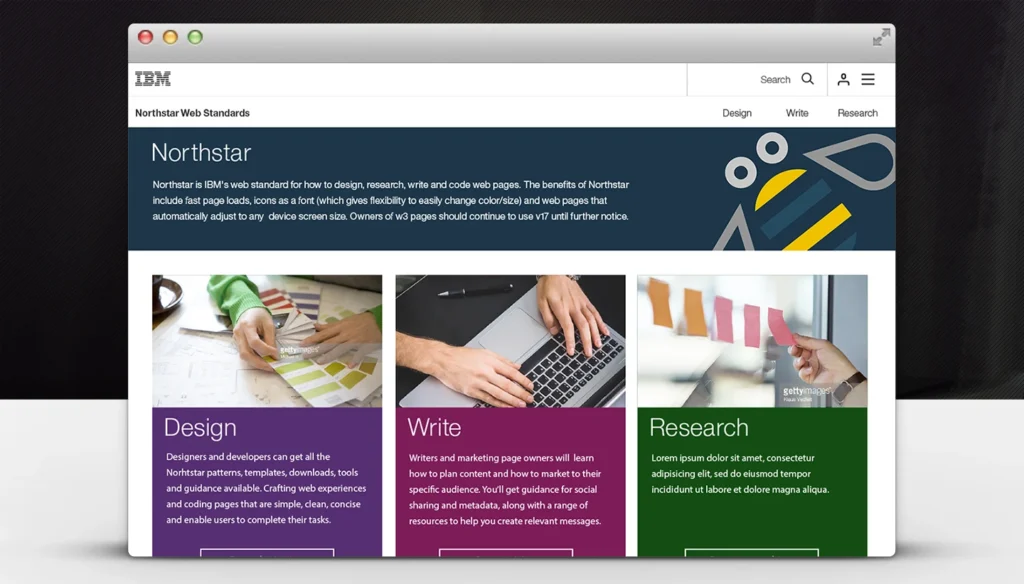
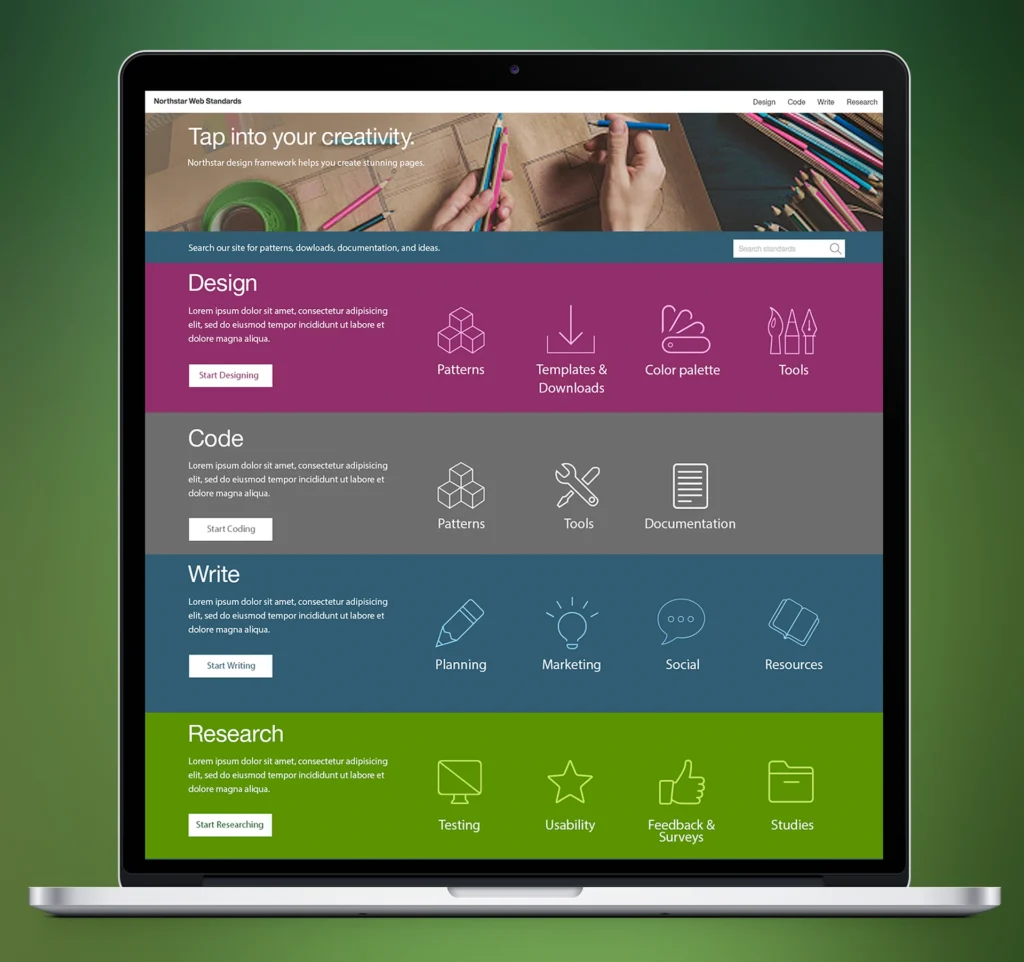
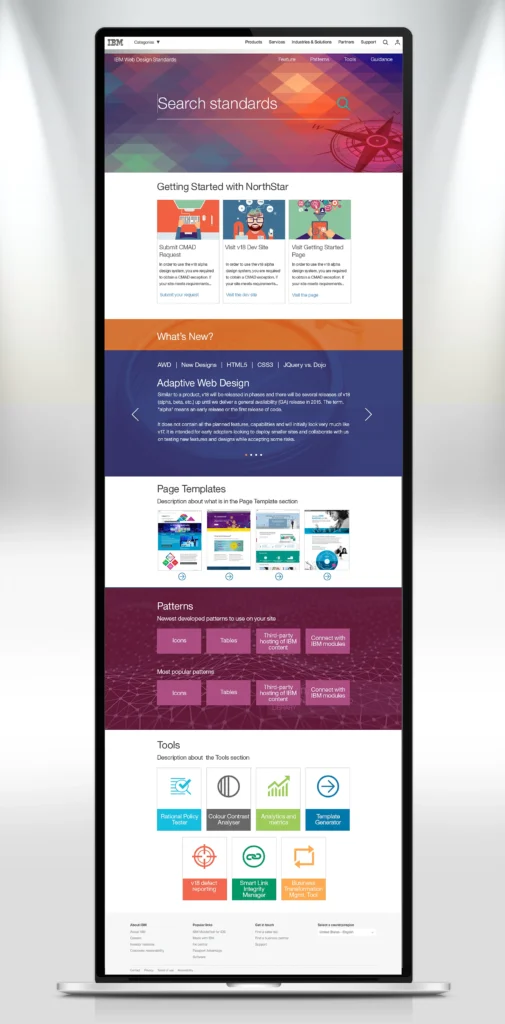
As part of IBM’s effort to unify its digital presence, our team helped launch the Northstar web standards site—an internal resource aimed at guiding the redesign of over 44 million IBM URLs.
Challenge
IBM internal developers and designers struggled to interpret dense guidelines, apply consistent branding across legacy systems, and locate the right components within a vast library. Many global teams lacked the tools and clarity needed to implement the new standards efficiently, leading to confusion, misalignment, and delays.
Our work focused on making Northstar more usable, actionable, and scalable—empowering teams to confidently bring their digital experiences in line with IBM’s new design direction.
User Research and Workshops
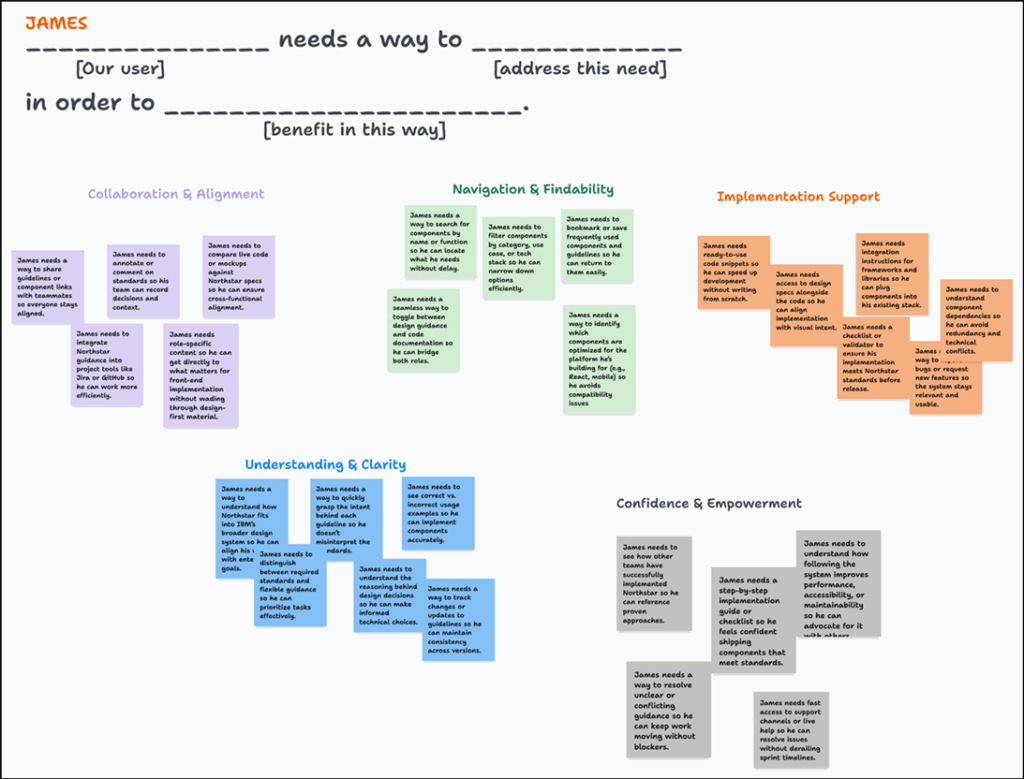
To better understand the pain points of teams using Northstar, we conducted interviews with designers, developers, and product owners across IBM. We supplemented these with collaborative workshops where participants mapped workflows, identified friction points, and co-created ideas for improvement. Activities like empathy mapping and journey mapping revealed critical gaps in usability, accessibility, and component discoverability—insights that directly informed our redesign strategy.

User Personas
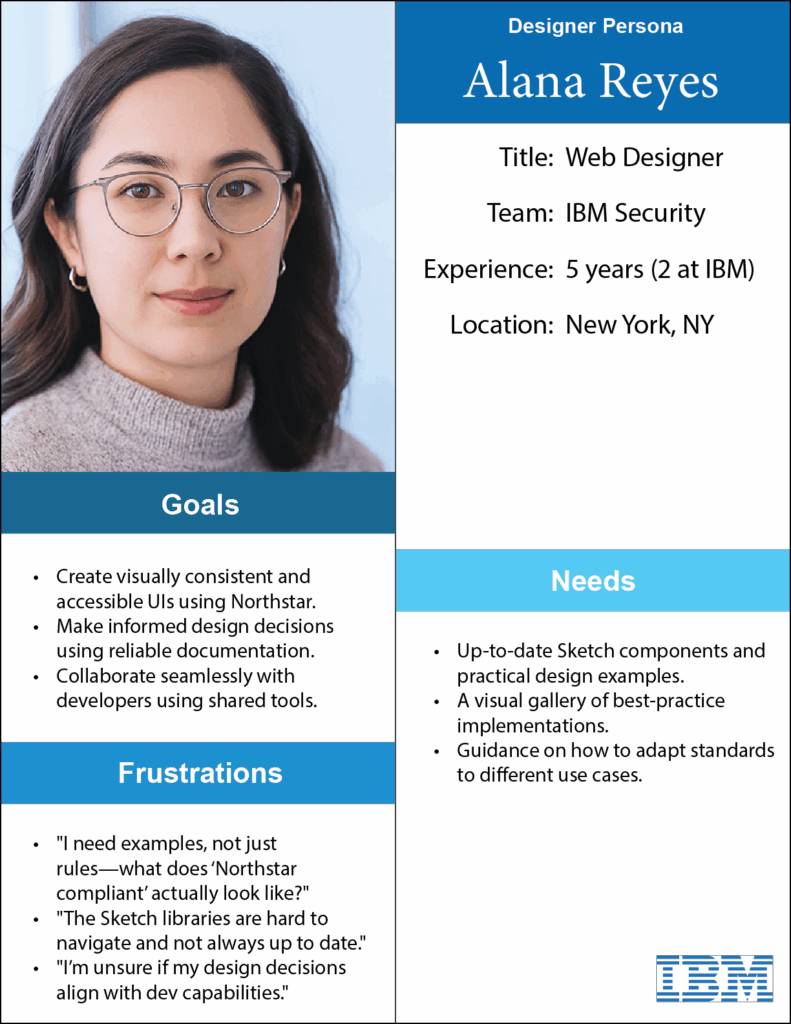
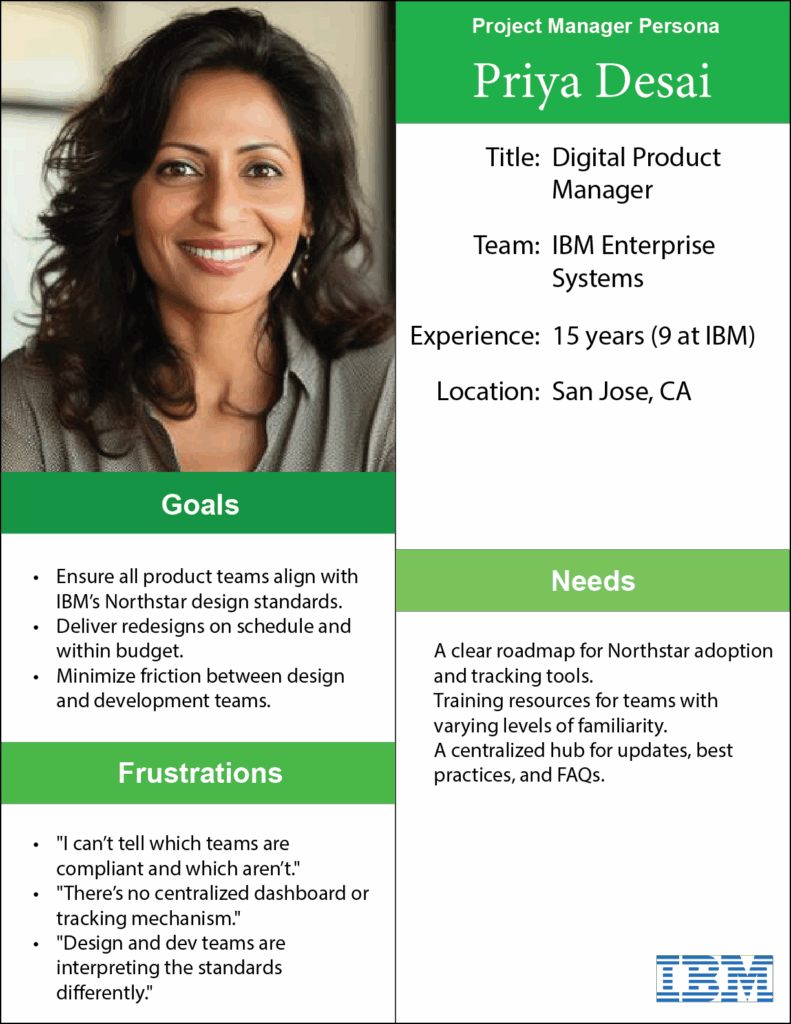
To ensure our solutions met the needs of real users, we created personas that captured the goals and challenges of key roles. Alana Reyes, a web designer, needed clear visual standards and flexible design patterns to support brand consistency. Priya Desai, a digital product manager, looked for scalable tools and guidance to keep cross-functional teams aligned. James Liu, a front-end developer, relied on accurate, well-documented components he could implement efficiently. These personas guided design and development decisions, keeping the user experience central throughout the project.

Sketches and Wireframes
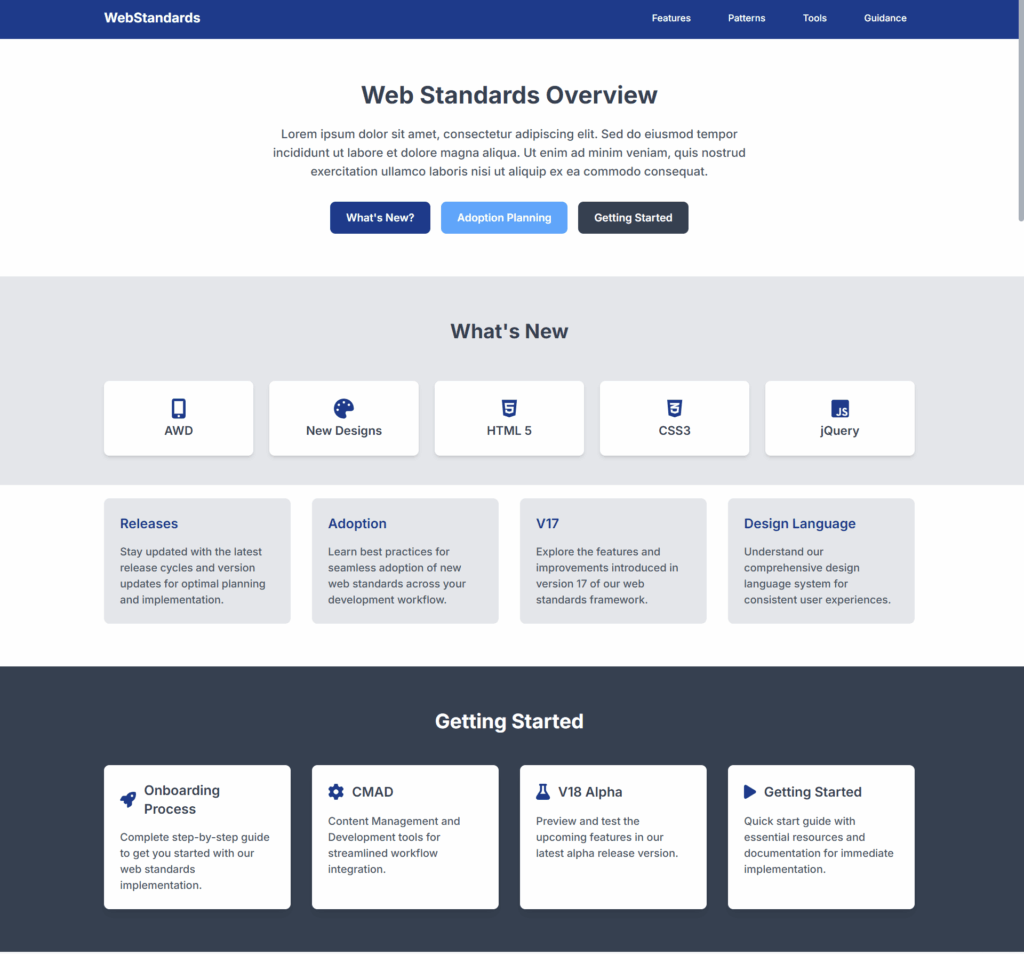
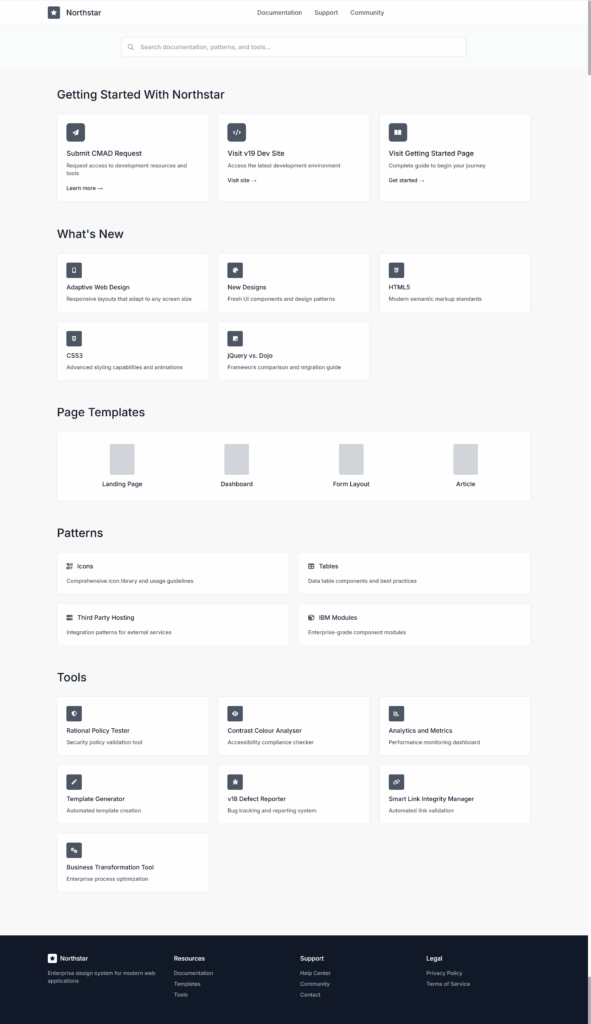
With insights from user research and defined personas, we began sketching, wireframing, and storyboarding to map out user journeys and interface ideas. We used tools like Figma for collaborative wireframing and interface design, Sketch for initial layout exploration, and InVision for building interactive prototypes. These design artifacts helped us rapidly iterate, test assumptions, and gather feedback from stakeholders—ensuring that the Northstar experience was intuitive, actionable, and aligned with real-world use cases.
Usability Testing Approach
To validate our design decisions, we conducted moderated usability testing sessions with designers, developers, and product managers across IBM. Using tools like Zoom for remote testing, Figma prototypes for task-based scenarios, and Lookback to capture user interactions and feedback, we identified pain points and areas for refinement. We focused on key tasks such as finding components, understanding guidelines, and implementing design patterns—using findings to drive iterative improvements and enhance overall usability.
Hi fi and Comps